Making it Big in Software
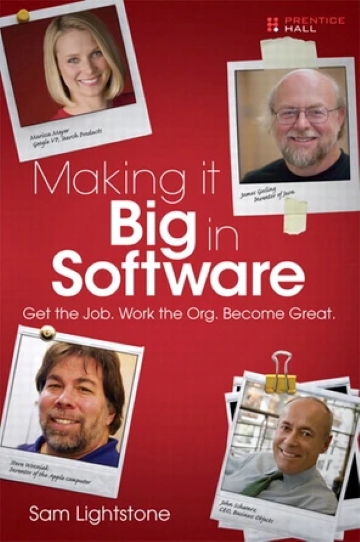
You can read on the back cover of the “Making it Big in Software” book “Here’s all the information you need to jumpstart your software development career: the best way to get hired, move up, and blaze your way to the top!” There is certainly more marketing ambition than software developer modesty in this statement. This being said, this book contains some valuable information for the computer science student or someone who is freshly graduated and has just started his professional journey.
Usually, you get out of school with a lot of technical training, but a lack of “people” skills that are important in your career. Influenced by the writer’s IBM background, a lot of the content is related to jobs in large organizations and it seems that “making it big” means mostly belonging to or creating a big company. Organizational politic and size make it more difficult to determine personal influence in this type of context. Larry Ellison made big bucks with software, but I doubt that many developers will consider him as a role model. You might find it more rewarding to be successful in a smaller company where you have more control on your own job and life.
If Making it Big in Software is a book strong on career related content, I will be more cautious with the “software development knowledge” content of the book. When you read that the Agile development process is “also known as the Disciplined Agile Delivery Process” or that Scrum doesn’t “address starting a project or releasing into production”, you can smell that there are some RUP preferences in the writer background, even if this process is not mentioned in the book.
The book is easy to read as you can either browse through chapters with frequent headlines that give you a high level view of the content or get deeper into a topic. The interviews of famous software development people inserted between chapters don’t’ reveal a lot of extraordinary insights, but they follow the same pattern and you can compare answers between the different participants.
Reference: “Making it Big in Software”, Sam Lighstone, 417 pages, IBSN 978-0-13-705967-5
Quotes
Everyone thinks they know good software when they see it. What businesses consider good software can be very different from what end users value. It’s not as simple as “great function, no bugs” (though that’s certainly a good starting point). Microsoft has been a leading software company in the world since 1983, despite a reputation that not all of their products were built to the highest-quality standards. Conversely, some of the seemingly most boring software products in the world have been great business successes for providing precious little more than extreme reliability.
Software development is a wonderful field in part because it’s always so fresh and dynamic. The dynamism of the industry and the rapid pace of change keep everyone focused on personal growth and learning—there’s absolutely no escaping it. Some people thrive on the elements of change and constant learning, whereas others struggle. But throughout the churn and the constant refactoring of best practices, one constant holds true across the industry: The first five years of professional work are always the most educational.
Two kinds of skills define employees: hard skills and soft skills. The hard skills are the technical skills you learn at school, such as requirements planning, software design, programming, debugging, software engineering, operating systems, and so on. Soft skills refer to everything else you need to know about working in an organization, such as teamwork, communication (written and oral), public speaking, organizational etiquette, negotiating, mentoring, recruiting, managing, and leading. Both sets of skills are always important, but early in your career, the hands-on technical skills are a little more dominant.
Leadership is defined more than anything by the quality of inspiring and directing improvement. When your actions and vision inspire others to improve individually or as a group, you are a leader. Some people seem born to lead. Most of us have to learn about it. What many people don’t realize is that leadership is a skill. As with learning to play piano or to cook a great pot roast, leadership might take practice, but most people can learn it if they apply themselves.
Nice books if it discusses the importance of soft skills in the software developer profession.